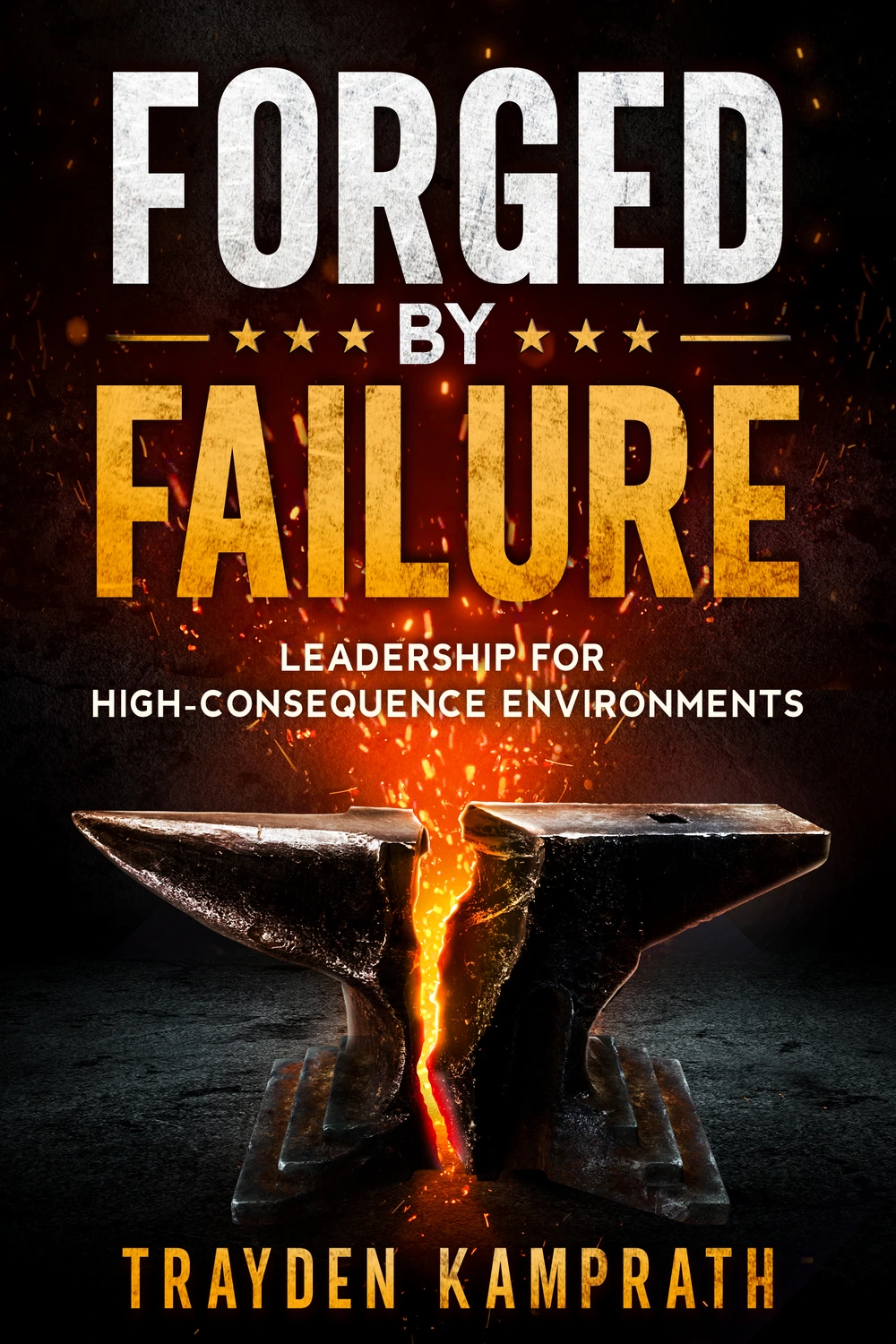
FORGED BY FAILURE Get the book

Leadership for high-consequence environments

When failure
can’t be
undone.

Leadership can’t be improvised.
A book about building people and systems that hold when the consequences are real.

Discover the book
30years where
failure is real
The doctrineTrust is a function
of competence.
Nuclear operationsAviationMilitaryHealthcareCritical infrastructure

Good intentions.
Real consequences.

Most leadership advice assumes you get another chance.

But what happens when getting it wrong can cost lives, missions, or public trust?

Forged by Failure examines the gap between leadership that sounds good and leadership that holds under pressure. Drawing on three decades in nuclear operations, Trayden Kamprath explores how failures develop, how leaders allow them, and how to build organizations that catch errors before they become catastrophes.

13Chapters on operational leadership
10Principles in one enduring doctrine
30Years of real-world experience

Failure has
a head start.

Small deviations become normal. Warning signs get explained away. The system makes the next failure more likely.

The book asks leaders to change those conditions. Explore the difference below.

An error enters the systemUnchecked
The people change. The conditions don’t.

When a deviation is tolerated, it can become the way work gets done.

An illustration of the book’s systems argument.

Principles.
Under pressure.

Ten principles distilled from the book.
Select one. Examine what it demands.

01 / 10

Consequence changes everything.

Leadership methods calibrated for forgiving environments fail in unforgiving ones.

Explore the doctrine

Built to hold.

The argument moves from how systems fail to what sustains performance when the stakes are real.

01—04

Understand how failure takes shape

  1. Why Good People Cause Serious Failures
  2. The Hidden Cost of Comfort-First Leadership
  3. Trust Is a Function of Competence
  4. Every Tolerated Deviation Is a Policy Decision
05—09

Build discipline into the system

  1. When Failure Teaches and When It Kills
  2. Leadership Is Control Before It Is Inspiration
  3. Accountability Is Feedback, Not Punishment
  4. Discipline Is Faster Than Speed
  5. Morale Is an Outcome, Not a Strategy
10—13

Create something that outlasts you

  1. Doctrine Before Style
  2. Making Doctrine Operational
  3. The Leader Is the Constraint
  4. What Endures After You Leave
“The real test of leadership is not how an organization performs when everything is going right. It is what the system does when something goes wrong.”From Forged by Failure
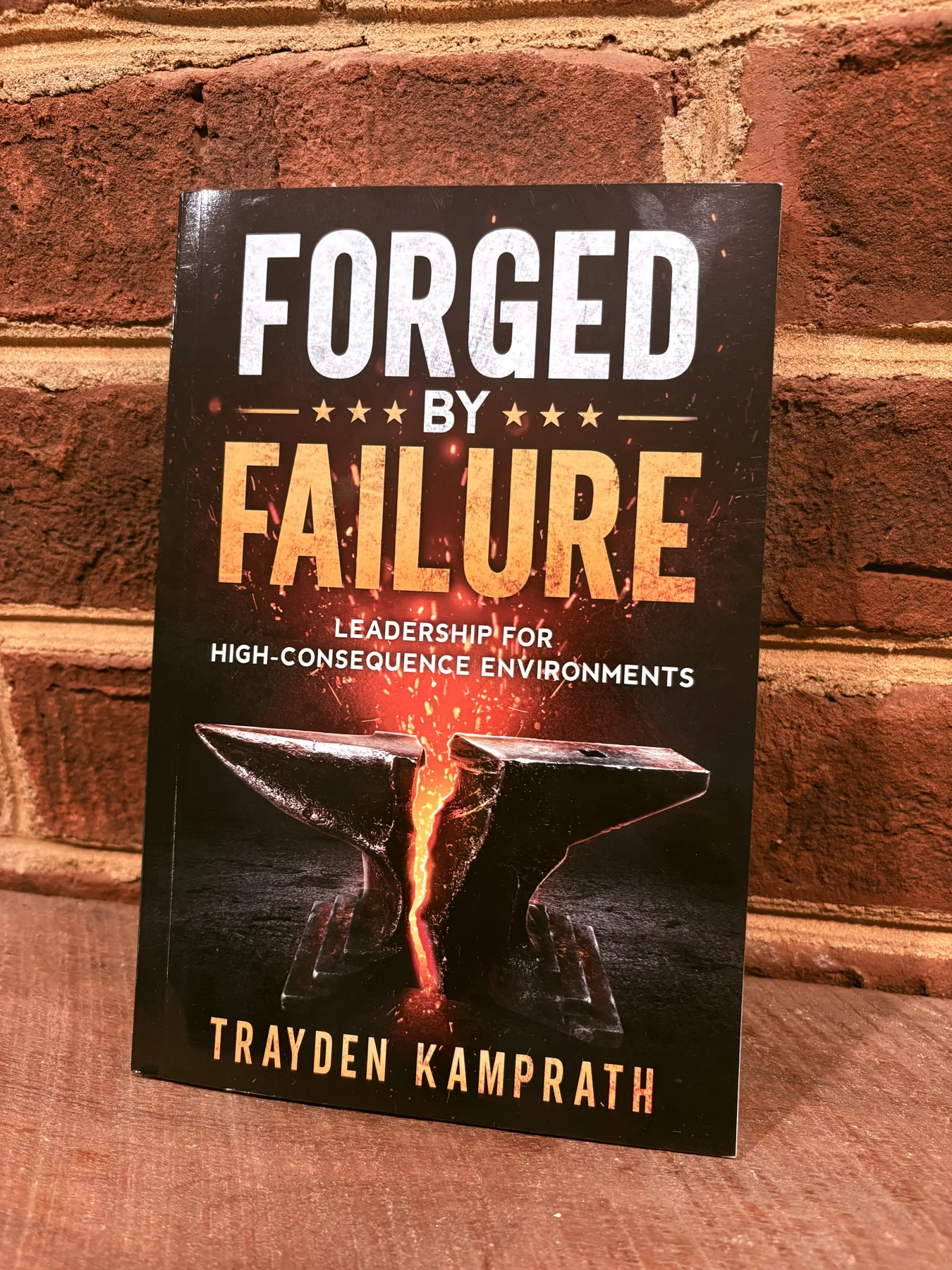
A physical copy of Forged by Failure standing against a brick wall
20 + 10Years in Navy nuclear propulsion
+ nuclear fuel operations
Forged by Failure · Trayden Kamprath

Experience earns
the argument.

Trayden Kamprath

Retired U.S. Navy Senior Chief Petty Officer. Operator. Instructor. Senior enlisted leader.

Trayden spent twenty years in Navy nuclear propulsion, followed by another ten years with the Department of Energy and government contractors in nuclear fuel operations.

His leadership framework comes from the places where it is tested: on watch, under pressure, and in the decisions that determine whether an error is caught or allowed to propagate.

Thirty years. Unforgiving systems.
Lessons built to endure.

Build what holds.

Leadership for High-Consequence Environments
by Trayden Kamprath

Retailer links are on their way. Check back here to get your copy.

Inside Forged by Failure

Where this
comes from.

I didn’t learn these principles in a classroom. I learned them in environments where getting it wrong meant people got hurt.

One scenario from those years still stands out. There was a piece of equipment with two operating modes: an emergency mode that ran on air power, and a normal mode operated by hand with a handwheel. The component had a defect, and it took the second broken forearm in two weeks before it was fixed.

The defect was obvious, and the fix was simple. Leadership chose to keep operations moving anyway.

I spent twenty years in Navy nuclear propulsion as an operator, instructor, and senior enlisted leader responsible for training, operations, and the performance of crews running some of the most complex and unforgiving systems ever built. I then spent another ten years with the Department of Energy and government contractors managing nuclear fuel operations, where the same principles applied in different organizations with comparable operational stakes.

In those environments, the test of leadership comes at 3 a.m., not in town halls or annual reviews: when something goes wrong, when a junior operator makes a call that could cascade into something catastrophic, when the pressure to meet the operational timeline conflicts with the standard that exists to prevent disaster. Quite often, what separated a near-miss from a catastrophe was not technical knowledge but whether the leader had built a system capable of catching the error before it propagated.

That’s where this framework came from. Thirty years of observing what actually works when failure is not always recoverable.

Trayden Kamprath · Forged by Failure
© 2026 Trayden Kamprath. All rights reserved.